
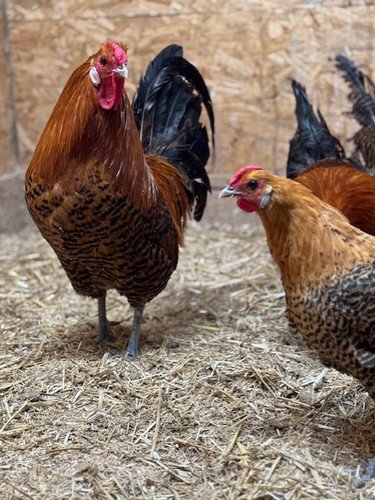
Golden Deathlayer Chicken
Golden Deathlayer chicken is a phenomenally active, free-ranging breed and are sure to become a favorite with small-scale egg producers and backyard hobbyists. But, if aesthetics are driving your choice, it is hard to imagine a more beautiful rooster than the Deathlayer. With its tight cushion comb, iridescent greens and purples in its black feathers, luxuriant tail, and totally black doll eyes, the Deathlayer can easily compete among the most beautiful chickens on the planet.
A fully mature rooster will showcase a beautiful tail with long sickle feathers that often reach the ground. Their piercing dark eyes add to the Deathlayer’s striking beauty, giving it a bold and mesmerizing presence. Both the silver and gold varieties display a pencilled feather pattern, small comb, white earlobes, and gray legs. The breed is clean-legged. The hens will normally lay about 4 eggs per week on average which is about 200 to 250 medium-sized, white eggs per year. The hens will lay for a very long time, and hence their name, typically will lay up until they die.
Rare Gold Deathlayer Chicken
The gold deathlayer chicken is a very flighty breed and doesn’t do well in a small coop. You need a large run or the ability to free-range them. If you try to keep them in a small coop we think you will quickly realize that neither you nor the birds will be happy – as the birds will frequently fly up or frantically pace, most of the time with a lot of vocalizations. But you will find that if they have a lot of space you will both be much happier. The hens don’t typically go broody so if you plan to hatch chicks, you will need to invest in an incubator. We’ve found that a 1:10 rooster-to-hen ratio works well with the Deathlayer.
Golden Deathlayer Eggs
We incubate golden deathlayer eggs at 99.5F and 55% humidity. The Deathlayer typically has outstanding viability and hatches extremely well. Most chicks hatch right at day 21 but we have seen a few chicks hatch a day or 2 late. So definitely plan to keep eggs in the hatcher an extra day or 2 just to make sure all of the chicks have time to hatch.
We have noticed that our lines are producing chicks that grow into birds with light yellow coloring, this is pretty noticeable on hatch day. A typical silver chick has a lot of gray fluff and gold chicks have a lot of very dark red-brown fluff. Scroll to see the images on this page for an example of how both of the chicks should look.
The chicks that grow to be light yellow or lemon tend to have yellow fluff on the silver chicks and light brown if hatching gold chicks. Also, inspect the chick’s legs to ensure every chick is clean-legged. You will need to make culls if hatching eggs from this breed.
Reviews
There are no reviews yet.